
 October is Breast Cancer Awareness Month
 Cooper A. Tonido, CGC
Therapy Dog
Hometown: Carlsbad, California
Instagram: @cooperofcarlsbad
Education: Canine Good Citizen, Certified Love on a Leash Therapy Pet
Office Locations: Kearny Mesa (Main Office), La Jolla
Cooper makes rounds at the Kearny Mesa locations most Fridays and at the La Jolla location some Thursdays. Please ask the paw-fice staff for de-tails.
I have particular interests in: Car rides, going to the beach, and afternoon naps
Hobbies:
I attend weekly Pawlates classes. I also volunteer at Sharp Memorial Hospital and Scripps Green Hospital as a therapy pet.
Mission statement: “As a rescue dog turned therapy dog, my mission is to bring joy, comfort, and healing to those in need. Through compassion and companionship, I aim to inspire hope, foster connection, and promote emotional well-being. Together with my human partner, I strive to create a safe space for individuals to share their feelings, find solace, and experience the unconditional love that only a dog can provide. My journey from rescue to therapy symbolizes resilience and the transformative power of love, reminding everyone that healing is possible. I look forward to meeting you soon!“
Bandit Stuhlmiller
Therapy Dog
Hometown: San Marcos, California
Instagram: @good.boybandit
Education: Alliance of Therapy Dogs Certified
Office Locations: Kearny Mesa
Hobbies: I have particular interests in: Car rides, walks and playing tug of war. Going to the beach, on trips with my family and playing with other dogs. I make friends everywhere I go and love all other animals.
Mission statement: “As a rescued Australian Shepherd with a friendly and gentle disposition, Bandit’s mission is to serve as a source of comfort, calm & connection for patients and families in the oncology setting. Through his unconditional affection and happy demeanor, he offers moments of peace, eases anxiety and brightens difficult days. He & his mom hope to serve as a reminder that no one walks this journey alone. Hope to meet you soon!”
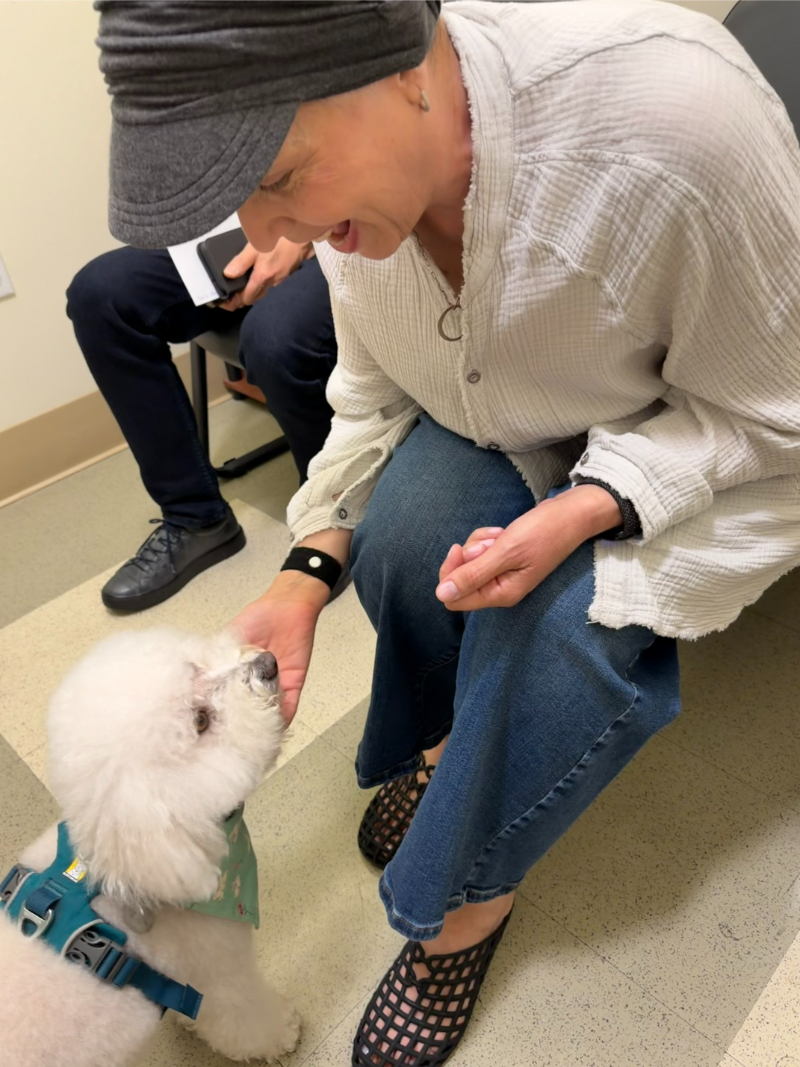
The Science Behind Animal Companionship in Cancer Care
As cancer care continues to evolve, there is growing recognition that outcomes are influenced not only by medical treatment, but also by lifestyle, emotional well-being, and social support. Recent research has begun to explore how something as simple as interaction with animals may play a meaningful role in the cancer experience.
A large, multi-center study analyzing data from more than 55,000 cancer patients examined the relationship between dog exposure and survival outcomes.
After adjusting for key factors such as age and sex, the study found:
- A 5-year mortality rate of 4.2% in patients with dog exposure vs. 9.6% in those without
- Approximately a 56% lower risk of death over five years
- Higher overall survival, with 94.9% alive at five years compared to 87.1% without dog contact
These findings represent one of the largest datasets to date exploring the relationship between animal companionship and cancer outcomes. As a retrospective study, these results demonstrate an association, not direct causation. However, the strength and scale of the data highlight an area of growing interest in oncology and survivorship care.
Researchers suggest several pathways through which animal interaction may contribute to improved outcomes:
- Psychological support
Reduced anxiety, depression, and perceived isolation - Behavioral impact
Increased light physical activity and daily engagement - Physiologic influence
Emerging evidence of effects on immune function and the gut microbiome
These factors align closely with known contributors to improved quality of life and, potentially, long-term outcomes in cancer care. While ongoing research continues to explore these relationships, the existing evidence reinforces an important principle: supportive, human-centered interventions matter.
Our therapy pet program was developed with this understanding in mind. It is designed to offer patients optional moments of calm, connection, and emotional support within the clinical environment. Therapy pets are not a substitute for medical treatment. However, they represent a meaningful complement to care, grounded in both patient experience and emerging evidence.
As research continues to evolve, so does our commitment to integrating thoughtful, supportive approaches that enhance the overall patient journey.
Because sometimes, the smallest moments make the biggest difference.
Research Source and Use
Preissner R, Yang Z, Preissner S, Thöne-Reineke C. Contact with dogs is associated with improved survival in cancer patients. Scientific Reports (2026). https://www.nature.com/articles/s41598-026-39952-z